Peptide Research
What Is TB-500?
TB-500 is a synthetic peptide fragment designed to represent a portion of thymosin beta-4, a naturally occurring protein found in many human and animal tissues.
Researchers have investigated TB-500 and related thymosin beta-4 pathways due to their involvement in cellular processes such as:
- Cell migration.
- Tissue remodeling.
- Blood vessel formation (angiogenesis).
- Cellular repair mechanisms.
Research involving thymosin beta-4-derived peptides has expanded into multiple areas, including wound response models, cardiovascular research, and studies involving hair follicle biology.
Why Study TB-500 and Hair Follicles?
Hair follicle growth cycles depend on several interconnected biological processes, including:
- Stem cell activity.
- Cellular movement.
- Vascular development.
- Extracellular matrix remodeling.
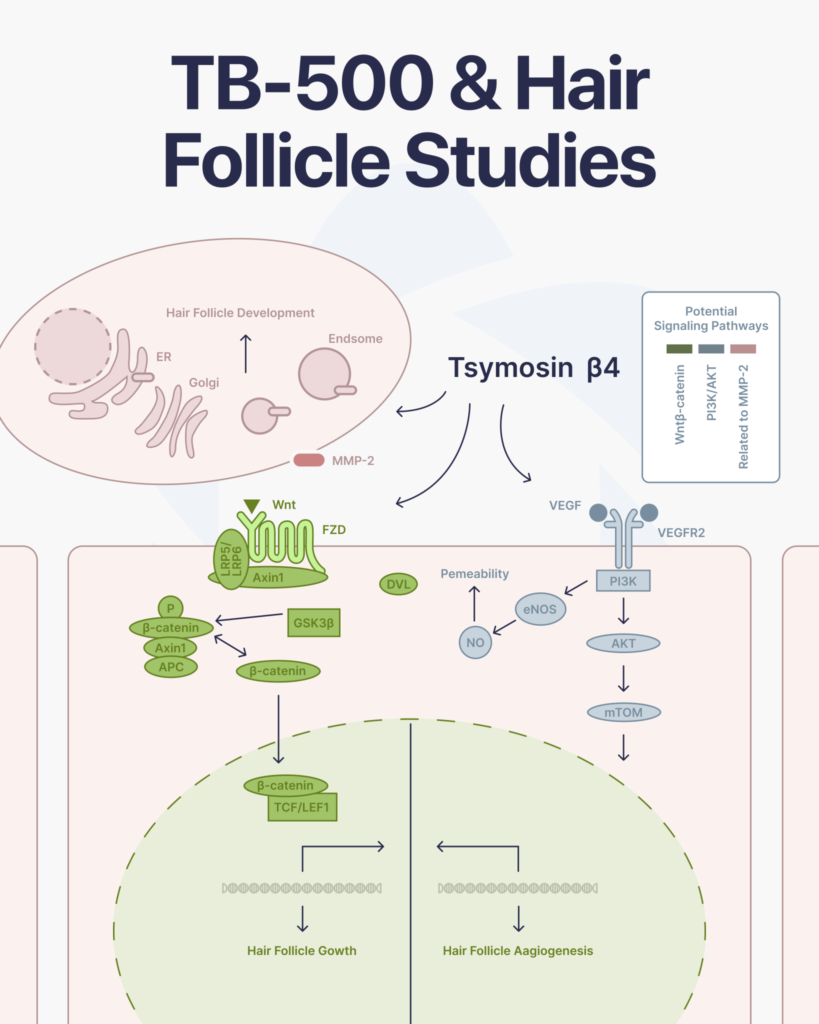
Because thymosin beta-4 has been associated with these cellular pathways, researchers have explored TB-500-related mechanisms to better understand how peptide signaling may influence follicular biology in experimental models.
Key Research Observations
Hair Follicle Stem Cell Activity
Research involving thymosin beta-4 has examined its relationship with hair follicle stem cell behavior. In animal models, studies have reported activation of stem cells located within the follicle bulge region, which is an important area involved in hair cycle regulation.
Angiogenesis and Vascular Support
Studies have investigated thymosin beta-4’s role in blood vessel formation around tissues, including areas surrounding hair follicles.
Researchers examine these pathways because vascular development is closely connected with nutrient transport and tissue environment during follicle activity.
Wound Healing and Follicle Research
Because hair follicle regeneration shares certain biological pathways with skin repair processes, TB-500-related research has also been conducted using wound response models.
Studies have explored how peptide signaling may interact with:
- Tissue remodeling pathways.
- Cellular migration processes.
- Regenerative responses.
Research Applications
In laboratory and preclinical research settings, TB-500 is studied to investigate:
- Dermal and follicular stem cell signaling.
- Cellular migration mechanisms.
- Angiogenesis pathways.
- Connections between tissue repair and follicle biology.
- Peptide interactions within regeneration models.
Research Use Disclaimer
All products offered by Aeturna Wellness are supplied exclusively for laboratory and scientific research purposes. They are not intended for human or animal consumption and are not approved to diagnose, treat, cure, or prevent any disease. The information provided on this page is intended solely for educational and informational purposes and should not be interpreted as medical advice or therapeutic guidance.