Peptide Research
What is GHK-Cu?
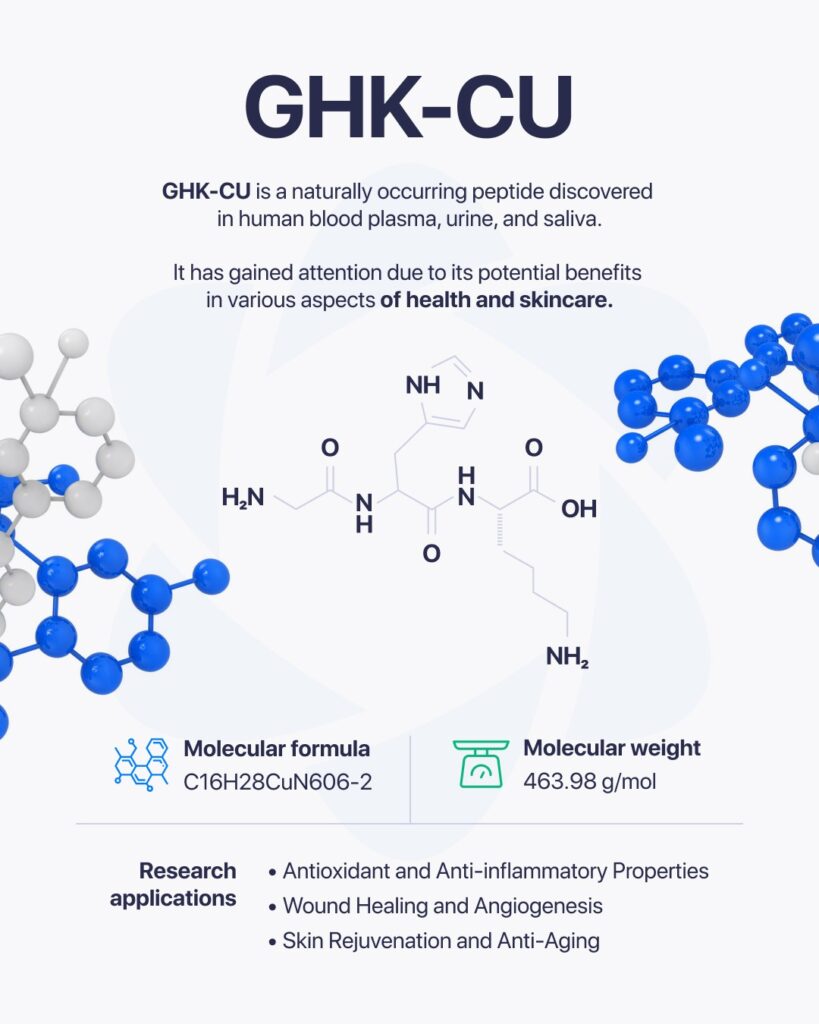
GHK-Cu (Glycyl-L-Histidyl-L-Lysine Copper) is a naturally occurring copper-binding peptide that has been identified in human plasma, saliva, and other biological tissues. Due to its involvement in cellular communication and tissue-related biological processes, it has been the subject of extensive scientific investigation for several decades.
To support controlled laboratory studies, researchers have developed synthetic forms of GHK-Cu to explore its potential role in skin biology, tissue regeneration, hair research, and cellular function.
Current Areas of GHK-Cu Research
Tissue Remodeling and Cellular Repair
One of the primary areas of GHK-Cu research focuses on its involvement in tissue remodeling. Experimental studies have examined its potential influence on collagen synthesis, extracellular matrix regulation, and biological pathways associated with tissue maintenance and regeneration.
Research has also explored its relationship with angiogenesis (the formation of new blood vessels) and enzymes responsible for maintaining the balance between tissue breakdown and rebuilding.
References: Maquart et al., 1993; Pickart & Margolina, 2018
Skin and Hair Research
GHK-Cu has become an important subject within dermatological and cosmetic research. Laboratory investigations continue to examine how the peptide may influence skin appearance, elasticity, and overall tissue quality.
Researchers have also explored its potential effects on hair follicle biology and pathways associated with healthy hair growth and maintenance in experimental models.
References: Campiche et al., 2019; Pickart et al., 2015
Inflammation and Oxidative Stress Studies
Scientific investigations have evaluated GHK-Cu for its interaction with biological pathways involved in inflammation and oxidative stress. Experimental findings suggest the peptide may influence gene expression associated with cellular defense mechanisms and tissue homeostasis, making it a valuable area of ongoing research.
Neurological Research
GHK-Cu is also being investigated for its potential role in nervous system biology. Preclinical research has explored how it may affect cellular signaling pathways involved in nerve regeneration, neuronal maintenance, and tissue recovery following experimental injury.
Although this field continues to develop, GHK-Cu remains a promising compound for researchers studying regenerative biology.
References
- Maquart, F. X., et al. (1993). Research on GHK-Cu and extracellular matrix remodeling.
- Pickart, L., & Margolina, A. (2018). Regenerative and Protective Actions of the GHK-Cu Peptide in Experimental Research.
- Campiche, R., et al. (2019). Clinical and laboratory investigations involving GHK-Cu in cosmetic skin research.
- Pickart, L., et al. (2015). Studies examining the role of GHK-Cu in skin and hair biology.
Research Use Disclaimer
All products available through Aeturna Wellness are supplied exclusively for laboratory and scientific research purposes. They are not intended for human or veterinary use and are not approved to diagnose, treat, cure, or prevent any disease. The educational content provided on this page is intended solely to support scientific research and should not be interpreted as medical advice, diagnosis, or treatment.