Peptide Research
What Are In Vitro Studies?
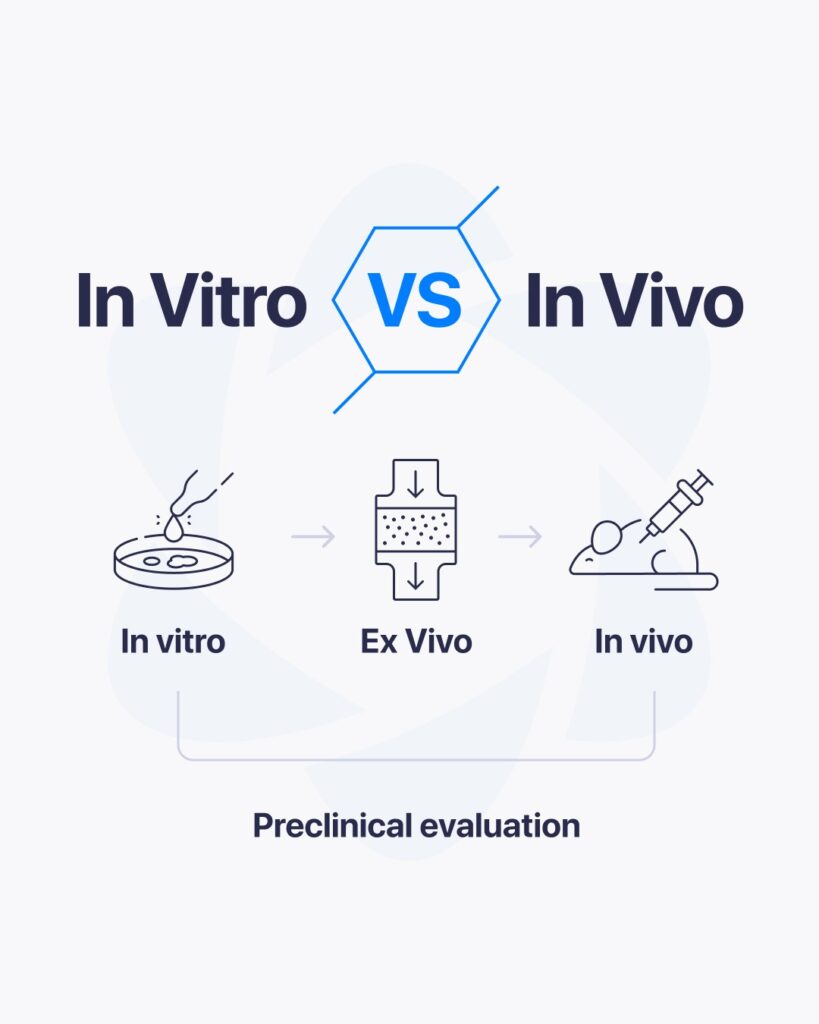
In vitro studies are scientific experiments conducted outside of a living organism, typically using laboratory environments such as test tubes, petri dishes, or specialized research equipment. The term in vitro comes from Latin and means “within glass.”
Researchers use in vitro testing as an early-stage approach to examine how peptides, compounds, and biological molecules interact at the cellular and molecular levels before progressing to more complex research models.
These studies allow scientists to evaluate potential effects on biological processes such as cellular signaling, protein activity, tissue-related pathways, and inflammatory responses in a controlled laboratory environment.
Reference: Pampaloni et al., 2007
The Role of In Vitro Studies in Peptide Research
Many peptides, including compounds such as BPC-157, GHK-Cu, and GLP-1 related peptides, are investigated using in vitro methods as part of the early research process.
Laboratory studies may help researchers examine areas such as:
- Cellular activity and response mechanisms
- Collagen production pathways
- Tissue repair-related signaling
- Antioxidant properties
- Inflammatory pathway interactions
By studying these processes at the cellular level, researchers can gain valuable insights into how specific compounds interact with biological systems.
Advantages of In Vitro Research
Controlled Research Environment
One of the major benefits of in vitro testing is the ability to study specific biological variables under controlled conditions. Researchers can isolate individual pathways and measure responses related to processes such as nitric oxide signaling, receptor activity, or growth factor expression.
Reference: Hartung, 2007
Early Research Evaluation
In vitro models allow scientists to gather preliminary information about how a peptide interacts with cells. These findings can help determine whether additional research and more advanced study models may be appropriate.
Efficient and Scalable Testing
Compared with more complex research models, in vitro studies can often be performed more quickly and with fewer resources. This makes them valuable tools during the early stages of scientific investigation.
Limitations of In Vitro Studies
Although in vitro research provides important scientific insights, laboratory cell models do not fully represent the complexity of an entire living organism.
A response observed in a controlled laboratory environment may not always produce the same outcome in animal models or humans. For this reason, in vitro research is considered one part of a larger scientific evaluation process.
Reference: van der Worp et al., 2010
Common In Vitro Applications in Peptide Research
Researchers use in vitro models to investigate a variety of peptide-related mechanisms, including:
- Examining cellular response pathways associated with BPC-157 research.
- Studying copper-binding activity and collagen-related processes with GHK-Cu.
- Evaluating receptor interactions of GLP-1 related compounds such as Semaglutide and Tirzepatide.
References
- Pampaloni, F., Reynaud, E.G., & Stelzer, E.H. (2007). The third dimension bridges the gap between cell culture and live tissue. Nature Reviews Molecular Cell Biology, 8(10), 839–845.
- Hartung, T. (2007). Food for thought… on cell culture. ALTEX, 24(3), 143–147.
- van der Worp, H.B., et al. (2010). Can animal models of disease reliably inform human studies? PLoS Medicine, 7(3), e1000245.
Research Use Disclaimer
All products provided by Aeturna Wellness are intended solely for laboratory and scientific research purposes. They are not intended for human or animal consumption and are not approved to diagnose, treat, cure, or prevent any disease. The information presented on this page is for educational and informational purposes only and should not be considered medical advice or therapeutic guidance.