Peptide Research
What Is MOTS-c?
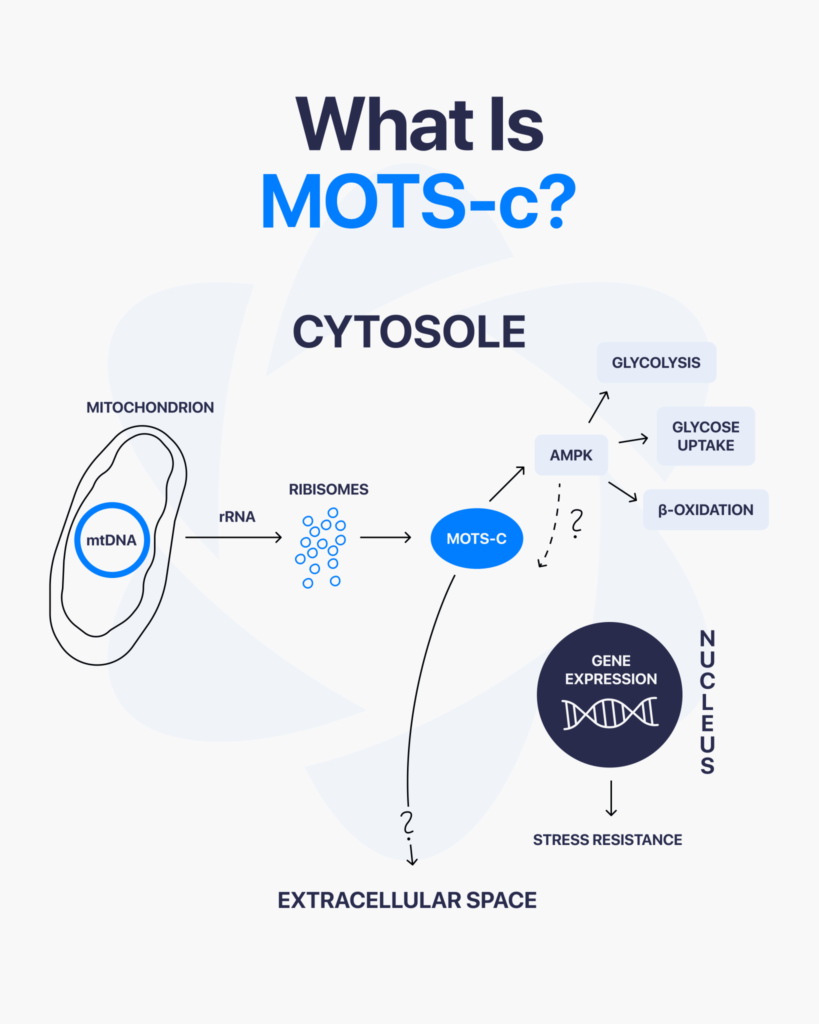
MOTS-c (Mitochondrial Open Reading Frame of the 12S rRNA type-c) is a small peptide encoded by the mitochondrial genome. Unlike many peptides that are produced from nuclear DNA, MOTS-c originates from mitochondrial genetic material, highlighting the expanding role of mitochondria in cellular signaling beyond their traditional function in energy production.
The discovery of mitochondrial-derived peptides such as MOTS-c has increased scientific interest in how mitochondria may influence metabolic regulation, cellular communication, and stress-response pathways.
How MOTS-c Is Studied in Research
MOTS-c has been investigated across different research models, including cellular studies, animal models, and human observations.
In Vitro Research
Laboratory cell studies have explored how MOTS-c interacts with metabolic pathways, including:
- Cellular energy regulation.
- Glucose utilization mechanisms.
- Stress-response signaling.
- Mitochondrial-related processes.
These studies help researchers understand how mitochondrial-derived peptides communicate with cellular systems.
Preclinical Research
Animal studies have examined MOTS-c in relation to:
- Energy balance pathways.
- Skeletal muscle activity.
- Mitochondrial function.
- Metabolic signaling responses.
These models provide researchers with insights into how MOTS-c behaves within more complex biological systems.
Human Research
Human studies have measured circulating MOTS-c levels in different physiological conditions, including:
- Physical activity and exercise.
- Aging-related changes.
- Metabolic states.
These observations help researchers evaluate how MOTS-c levels may vary under different biological conditions.
Key Research Observations
Metabolic Signaling
Research has identified associations between MOTS-c and important metabolic pathways, including AMPK signaling and folate metabolism. These pathways are involved in cellular energy regulation and metabolic adaptation.
Cellular Stress Response
Studies suggest that MOTS-c levels may change in response to various cellular and environmental stress conditions. Researchers continue to investigate how this peptide may contribute to cellular adaptation mechanisms.
Age-Related Changes
Research has reported that MOTS-c levels may decrease with age in certain tissues and circulating samples. This observation has contributed to growing interest in mitochondrial-derived peptides and age-related cellular research.
Exercise-Related Signaling
Human research has examined changes in MOTS-c following physical activity. Some studies have observed increased MOTS-c levels after acute exercise, suggesting a potential connection between mitochondrial signaling and exercise-related cellular responses.
Research Applications
Scientists continue to study MOTS-c in laboratory settings to explore:
- Communication pathways between mitochondria and the nucleus.
- Mitochondrial contributions to cellular metabolism.
- Peptide signaling during metabolic stress.
- Exercise-associated molecular signaling.
- Age-related changes in mitochondrial function.
Research Use Disclaimer
All products available through Aeturna Wellness are supplied exclusively for laboratory and scientific research purposes. They are not intended for human or animal consumption and are not approved to diagnose, treat, cure, or prevent any disease. The information provided on this page is intended for educational and informational purposes only and should not be interpreted as medical advice or therapeutic guidance.