Peptide Research
What Is Mass Spectrometry?
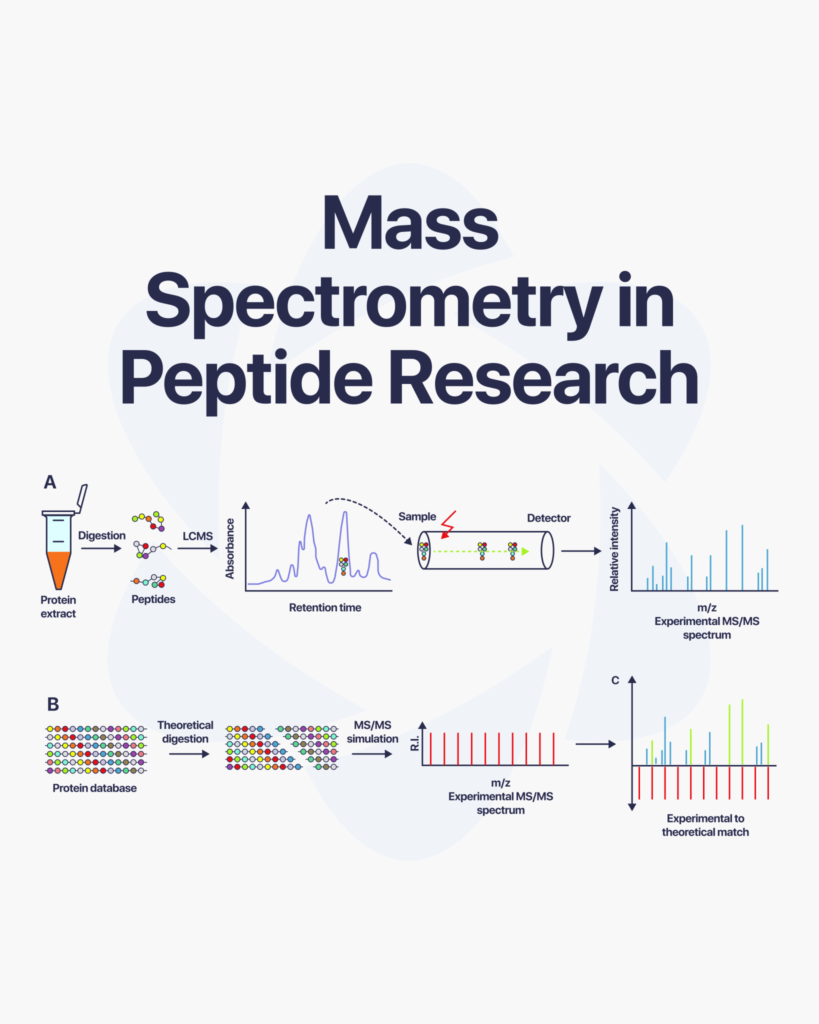
Mass spectrometry (MS) is an advanced analytical technique used to measure the mass-to-charge ratio (m/z) of ionized molecules.
During analysis, molecules are converted into charged particles and separated based on their mass and charge characteristics. This allows researchers to determine molecular weights, identify unknown compounds, and analyze complex mixtures with high sensitivity and accuracy.
Mass spectrometry is widely used across biological and chemical research because it provides detailed molecular information that supports compound identification and characterization.
Why Is Mass Spectrometry Used in Peptide Research?
Peptides are short chains of amino acids that can differ in sequence, structure, and chemical modifications. Because even small molecular changes can affect peptide characteristics, researchers rely on mass spectrometry for precise analysis.
In peptide research, MS is commonly used to:
Confirm Peptide Identity
Researchers compare measured molecular weight data with expected values to verify peptide composition and identity.
Detect Molecular Modifications
Mass spectrometry can help identify structural changes, including natural or synthetic modifications that alter peptide mass.
Evaluate Purity
MS analysis can help detect unwanted by-products, impurities, or related compounds within synthetic peptide preparations.
Analyze Peptide Sequences
Through fragmentation-based techniques, researchers can study peptide structures and determine amino acid arrangements.
Common Mass Spectrometry Methods in Peptide Analysis
MALDI-TOF (Matrix-Assisted Laser Desorption/Ionization–Time of Flight)
MALDI-TOF is commonly used for rapid molecular weight analysis of peptides.
It provides researchers with information about peptide mass and helps support identification of purified compounds.
ESI (Electrospray Ionization)
ESI allows researchers to analyze peptides in solution and is often combined with liquid chromatography techniques for detailed molecular analysis.
LC-MS/MS (Liquid Chromatography–Tandem Mass Spectrometry)
LC-MS/MS combines separation through liquid chromatography with fragmentation analysis through tandem mass spectrometry.
This approach enables detailed investigation of:
- Peptide sequences.
- Molecular structures.
- Chemical modifications.
- Complex biological samples.
Research Applications of Mass Spectrometry
Mass spectrometry plays an important role in many areas of peptide science, including:
Peptide Quality Analysis
Researchers use MS to verify synthetic peptide batches and confirm molecular identity.
Protein and Peptide Interaction Studies
MS techniques help investigate interactions between peptides and proteins within biological systems.
Biological Sample Analysis
Researchers use mass spectrometry to identify and profile naturally occurring peptides in complex biological samples.
Structural Characterization
MS helps scientists study peptide modifications and structural features by analyzing precise molecular changes.
Research Applications
Scientists use mass spectrometry to investigate:
- Peptide identity and composition.
- Molecular modifications.
- Synthetic peptide characterization.
- Protein–peptide interactions.
- Complex biological samples.
- Structural biology mechanisms.
Research Use Disclaimer
All products available through Aeturna Wellness are supplied exclusively for laboratory and scientific research purposes. They are not intended for human or animal consumption and are not approved to diagnose, treat, cure, or prevent any disease. The information provided on this page is intended solely for educational and informational purposes and should not be interpreted as medical advice or therapeutic guidance.