Scientific Research Overview
Why Acetic Acid Production Continues to Evolve
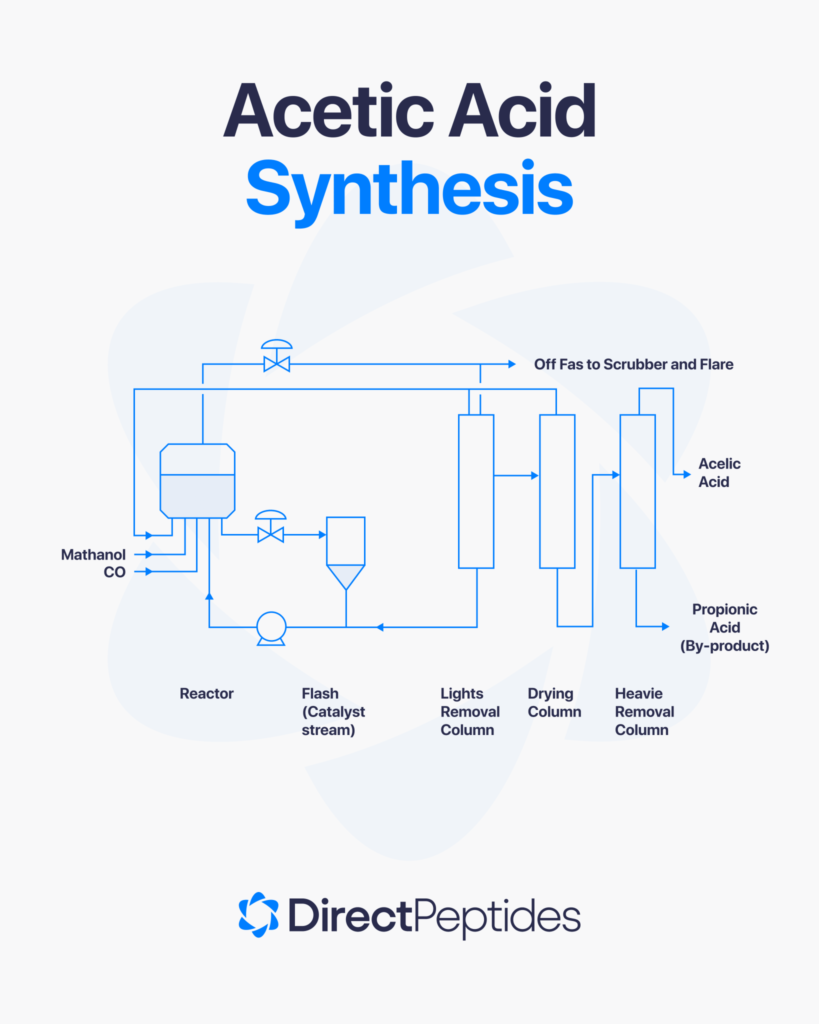
Acetic acid is an important industrial chemical widely used in the production of polymers, solvents, coatings, and chemical intermediates. Traditional manufacturing methods, including methanol carbonylation, remain the primary commercial approaches due to their efficiency and scalability.
However, growing interest in sustainability, energy efficiency, and carbon reduction has encouraged researchers to explore alternative methods for producing acetic acid with improved environmental performance.
Recent research has focused on developing cleaner catalytic systems, carbon utilization technologies, and more efficient production processes.
Recent Innovations in Acetic Acid Research
Green Catalytic Approaches
Researchers are exploring improvements to established carbonylation technologies, including advanced catalyst designs and optimized reaction processes.
These approaches aim to:
- Reduce energy consumption.
- Improve catalyst efficiency.
- Minimize waste generation.
- Increase process sustainability.
Simulation-based process improvements have also examined ways to reduce separation requirements and improve heat recovery within production systems.
Carbon Capture and Utilization (CCU)
Carbon capture and utilization technologies represent an emerging area of research focused on converting captured carbon dioxide (CO₂) into valuable chemical products.
Scientists are investigating microbial and catalytic systems capable of transforming waste carbon sources into acetic acid feedstocks, creating potential pathways for more circular chemical production.
Photocatalytic CO₂ Conversion
Photocatalytic approaches are being studied as potential alternatives for producing acetic acid using light-driven chemical processes.
Recent research involving advanced photocatalyst materials has demonstrated improved selectivity and efficiency in converting carbon dioxide into acetic acid under laboratory conditions.
These developments highlight the potential of low-temperature, renewable-energy-driven chemical production methods.
Process Optimization and Purity Improvements
Modern research is also focused on improving existing production methods through process intensification.
Researchers are investigating strategies such as:
- Simplifying production steps.
- Improving heat integration.
- Reducing energy requirements.
- Enhancing product separation and purity.
These improvements may help increase efficiency while lowering overall production demands.
Research Findings and Observations
Sustainable Production Pathways
Recent studies have examined alternative production routes, including biomass-based and waste-derived feedstocks. Research suggests that these approaches may become competitive with conventional methods when combined with highly selective catalysts and efficient separation technologies.
Energy Reduction Through Process Design
Optimization studies based on traditional carbonylation frameworks have explored reducing separation stages and improving energy recovery systems. These approaches demonstrate how engineering improvements can significantly influence industrial efficiency.
Advances in Photocatalyst Performance
Laboratory investigations of advanced photocatalytic systems have reported improved acetic acid production rates and selectivity compared with earlier generations of photocatalysts.
These findings suggest that continued improvements in catalyst structure and reaction control may contribute to future sustainable chemical manufacturing.
Industrial Interest in Carbon Utilization
Chemical industry research continues to expand around carbon capture and utilization technologies. Companies and research organizations are exploring methods to transform industrial carbon emissions into useful chemical building blocks.
Potential Research Applications
Catalyst Evaluation
Researchers can compare emerging catalyst systems with conventional industrial benchmarks to evaluate:
- Selectivity.
- Stability.
- Energy efficiency.
- Production costs.
Hybrid Production Systems
Combining emerging technologies, such as carbon utilization or photocatalysis, with established manufacturing methods may provide transitional pathways toward more sustainable chemical production.
Process Engineering Studies
Recent developments in heat recovery, process integration, and simplified separation methods provide valuable models for designing future pilot-scale production systems.
Environmental Impact Assessment
Lifecycle analysis and carbon accounting remain important research tools for evaluating whether new production methods provide meaningful environmental benefits compared with traditional approaches.
Research Information Disclaimer
The information provided by Aeturna Wellness is intended for educational and scientific information purposes only. Research topics and materials discussed are presented to support general scientific understanding and should not be interpreted as medical advice, therapeutic guidance, or product recommendations.