Peptide Research
What Is AOD-9604?
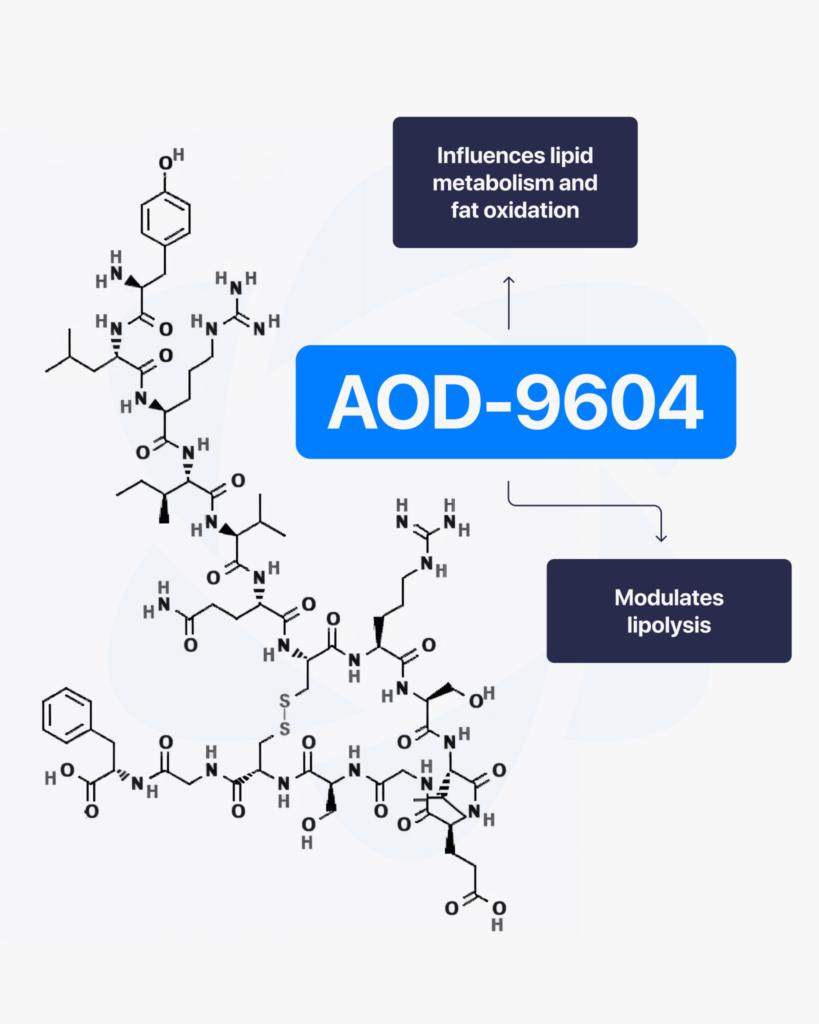
AOD-9604 is a synthetic peptide fragment based on a specific region of human growth hormone (hGH). It is derived from the C-terminal portion of hGH, specifically amino acids 177–191, with an additional tyrosine modification designed to improve peptide stability.
Researchers developed AOD-9604 to investigate how smaller peptide fragments related to growth hormone may interact with metabolic pathways, particularly those associated with lipid metabolism, without activating the broader range of biological pathways associated with full-length growth hormone.
How AOD-9604 Has Been Studied in Research
AOD-9604 has been evaluated across several types of scientific research models, including:
In Vitro Research
Laboratory studies have examined AOD-9604 using cellular models to investigate areas such as:
- Molecular interactions
- Gene expression patterns
- Cellular response pathways
- Research-related safety markers
Preclinical Models
Animal-based research has explored how AOD-9604 may influence metabolic pathways, including mechanisms related to lipid processing, receptor activity, and cellular signaling.
Human Research Studies
Clinical investigations have evaluated various biological markers, including:
- IGF-1 levels
- Glucose-related markers
- General tolerability and safety observations
These studies help researchers understand how the peptide behaves across different research environments, while outcomes may vary depending on the model and methodology used.
Research Findings Associated With AOD-9604
Metabolic Signaling Pathways
Research models have investigated AOD-9604’s relationship with metabolic signaling mechanisms. Some animal studies have reported changes involving beta-3 adrenergic receptor activity in adipose tissue, suggesting a possible role in fat-cell signaling pathways.
Growth Hormone Pathway Independence
Unlike full-length growth hormone, research studies have reported that AOD-9604 does not significantly influence IGF-1 levels in tested models. This distinction has made it an area of interest for researchers examining selective peptide activity.
Safety and Research Evaluation
Toxicology investigations and clinical studies have evaluated AOD-9604 for various safety-related markers. Published research has reported no significant genotoxic activity, antibody formation, or notable differences compared with placebo groups in specific study settings.
Advantages and Limitations in Research Settings
Advantages
Targeted Research Application
AOD-9604 provides researchers with a tool for studying specific metabolic pathways while limiting activation of broader growth hormone-related mechanisms.
Established Research History
The peptide has been examined through multiple research approaches, including laboratory, animal, and clinical investigations, providing researchers with a broad range of available data.
Versatile Research Models
Because AOD-9604 has been evaluated across different experimental systems, it remains a useful compound for studying peptide behavior and metabolic signaling.
Limitations
Ongoing Mechanism Research
Although certain pathways have been identified, the exact molecular mechanisms behind AOD-9604 activity continue to be investigated.
Differences Between Research Models
Results observed in cellular or animal studies may not always correspond directly with findings from human research, highlighting the importance of evaluating data within the appropriate experimental context.
Limited Biological Scope
Current research primarily focuses on metabolic pathways, which may limit broader applications outside these specific areas of investigation.
Research Use Disclaimer
All products offered by Aeturna Wellness are supplied exclusively for laboratory and scientific research purposes. They are not intended for human or animal consumption and are not approved to diagnose, treat, cure, or prevent any disease. The information provided on this page is intended solely for educational and informational purposes and should not be interpreted as medical advice or therapeutic guidance.