Peptide Research
What Is Ipamorelin?
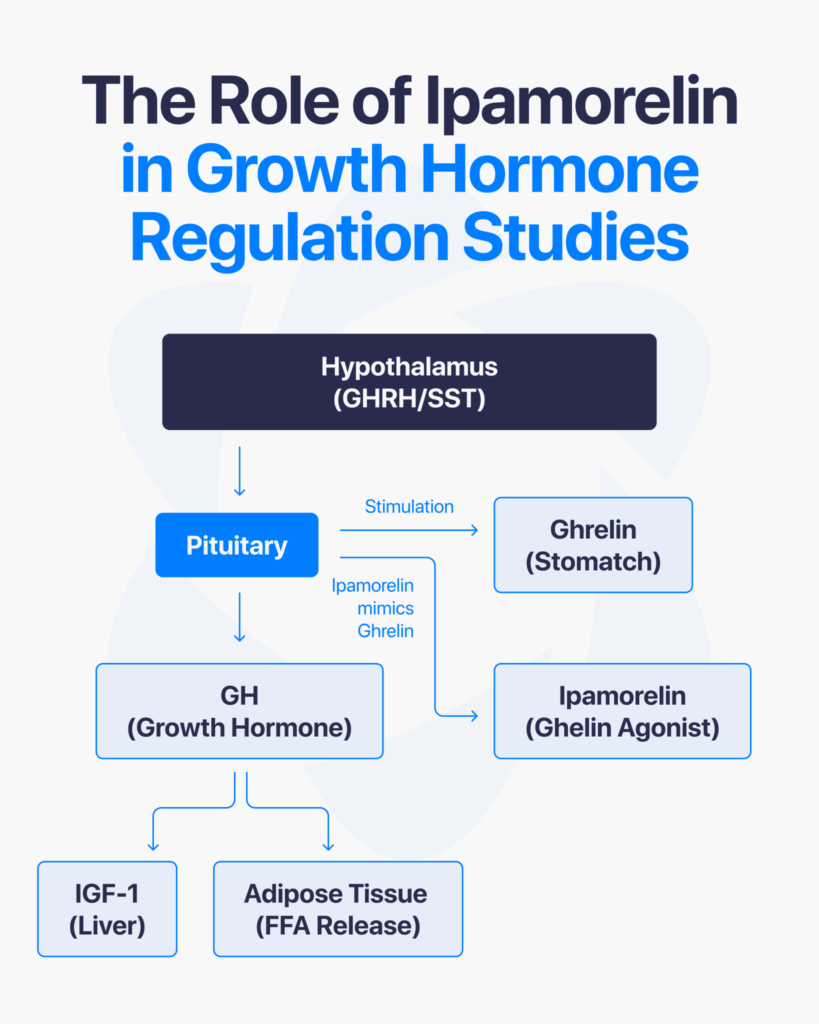
Ipamorelin is a synthetic pentapeptide classified as a growth hormone secretagogue (GHS). It is designed to interact with specific signaling pathways involved in growth hormone regulation.
Unlike earlier generations of growth hormone secretagogues, Ipamorelin has been studied for its selective interaction with growth hormone-related receptors, making it an important compound in laboratory research focused on endocrine signaling and hormone regulation.
How Ipamorelin Is Studied in Research
Research involving Ipamorelin has primarily focused on understanding its role in growth hormone signaling pathways. Studies have been conducted using several experimental models.
In Vitro Research
Cell-based studies have examined Ipamorelin’s interaction with growth hormone secretagogue receptors (GHS-R1a) and related intracellular signaling mechanisms, including:
- Calcium signaling pathways.
- cAMP-related cellular responses.
- Receptor binding activity.
These models help researchers evaluate how the peptide communicates with specific cellular receptors.
Preclinical Research
Animal studies have investigated Ipamorelin’s relationship with growth hormone release and related endocrine responses. Researchers use these models to examine hormonal signaling patterns and biological activity under controlled conditions.
Human Research
Clinical studies have evaluated Ipamorelin’s effects on various biological markers, including:
- Growth hormone levels.
- Insulin-related measurements.
- Cortisol responses.
- Other endocrine indicators.
These investigations provide insight into how selective growth hormone secretagogues interact with hormonal systems.
Key Research Observations
Selective Growth Hormone Signaling
Research has shown that Ipamorelin can stimulate growth hormone-related pathways while demonstrating limited influence on certain other pituitary hormones, including ACTH, prolactin, and luteinizing hormone (LH), within studied models.
Receptor Interaction
Ipamorelin has been investigated for its interaction with GHS-R1a receptors, which are involved in regulating growth hormone signaling. Its receptor selectivity is one of the primary reasons it continues to be studied in endocrine research.
Endocrine Response Profile
Research findings have examined Ipamorelin’s relationship with other hormonal pathways, with studies reporting limited effects on markers such as cortisol and prolactin compared with some earlier growth hormone secretagogues.
Research Applications
Scientists continue to use Ipamorelin in laboratory studies to investigate:
- Growth hormone release mechanisms.
- GHS receptor signaling pathways.
- Differences between various growth hormone secretagogues.
- Hormonal regulation and receptor selectivity.
- Interactions between peptide signaling and endocrine systems.
Research Use Disclaimer
All products available through Aeturna Wellness are supplied exclusively for laboratory and scientific research purposes. They are not intended for human or animal consumption and are not approved to diagnose, treat, cure, or prevent any disease. The information provided on this page is intended solely for educational and informational purposes and should not be interpreted as medical advice or therapeutic guidance.