Peptide Research
What is Cagrilintide?
Cagrilintide is a synthetic peptide engineered as a long-acting analogue of amylin, a naturally occurring hormone involved in metabolic regulation. In laboratory research, it is widely studied for its interactions with biological pathways associated with appetite signaling, energy balance, and metabolic function.
Researchers continue to investigate how cagrilintide influences receptors involved in satiety, gastric motility, and related physiological processes in controlled experimental models.
Understanding Amylin
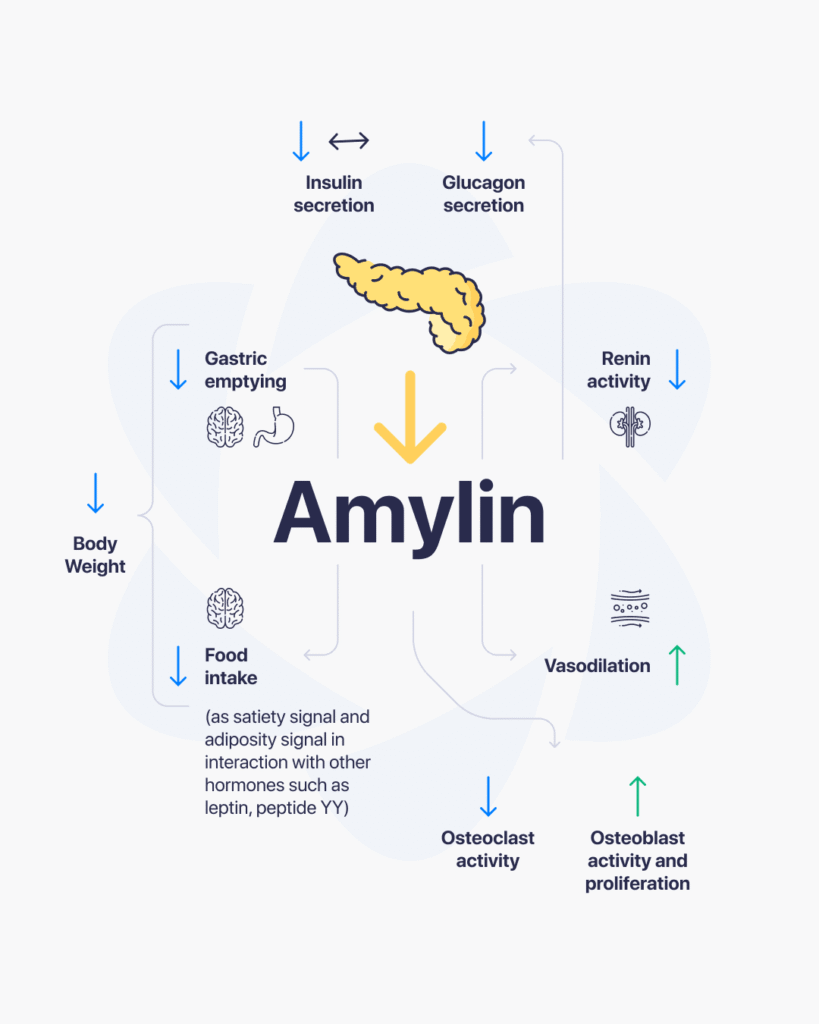
Amylin is a naturally occurring peptide that is released alongside insulin and plays an important role in several metabolic pathways. In research settings, it has been associated with:
- Influencing the rate of gastric emptying.
- Participating in satiety and appetite signaling pathways.
- Supporting the regulation of post-meal glucose responses in experimental models.
Because native amylin is rapidly broken down within the body, long-acting analogues such as cagrilintide have been developed to allow researchers to study these biological effects over extended periods.
Current Areas of Cagrilintide Research
Activity at Appetite Signaling Receptors
Laboratory investigations have demonstrated that cagrilintide interacts with receptors involved in appetite regulation. Experimental studies have associated this receptor activity with measurable changes in food intake, gastric motility, and markers related to energy homeostasis.
Research on Gastric Emptying
Cagrilintide has been examined for its ability to influence the rate at which stomach contents move into the digestive tract. In research models, slower gastric emptying has been associated with prolonged satiety signaling and more consistent metabolic responses, making this an important focus of ongoing investigation.
Combination Research with GLP-1 Analogues
Researchers are also exploring cagrilintide alongside GLP-1 receptor agonists, including compounds such as semaglutide. Both preclinical and clinical investigations continue to evaluate how these peptides may work together, with studies reporting complementary effects on metabolic signaling pathways and appetite-related mechanisms.
References
Scientific literature continues to investigate the pharmacology, receptor activity, and metabolic effects of cagrilintide in laboratory and clinical research settings. Researchers are encouraged to consult peer-reviewed publications for detailed methodology and study outcomes.
Research Use Disclaimer
All products offered by Aeturna Wellness are intended exclusively for laboratory and scientific research purposes. They are not intended for human or animal consumption and are not approved to diagnose, treat, cure, or prevent any disease. The information provided on this page is for educational and informational purposes only and should not be interpreted as medical advice or therapeutic guidance.