Peptide Research
What Is High-Performance Liquid Chromatography (HPLC)?
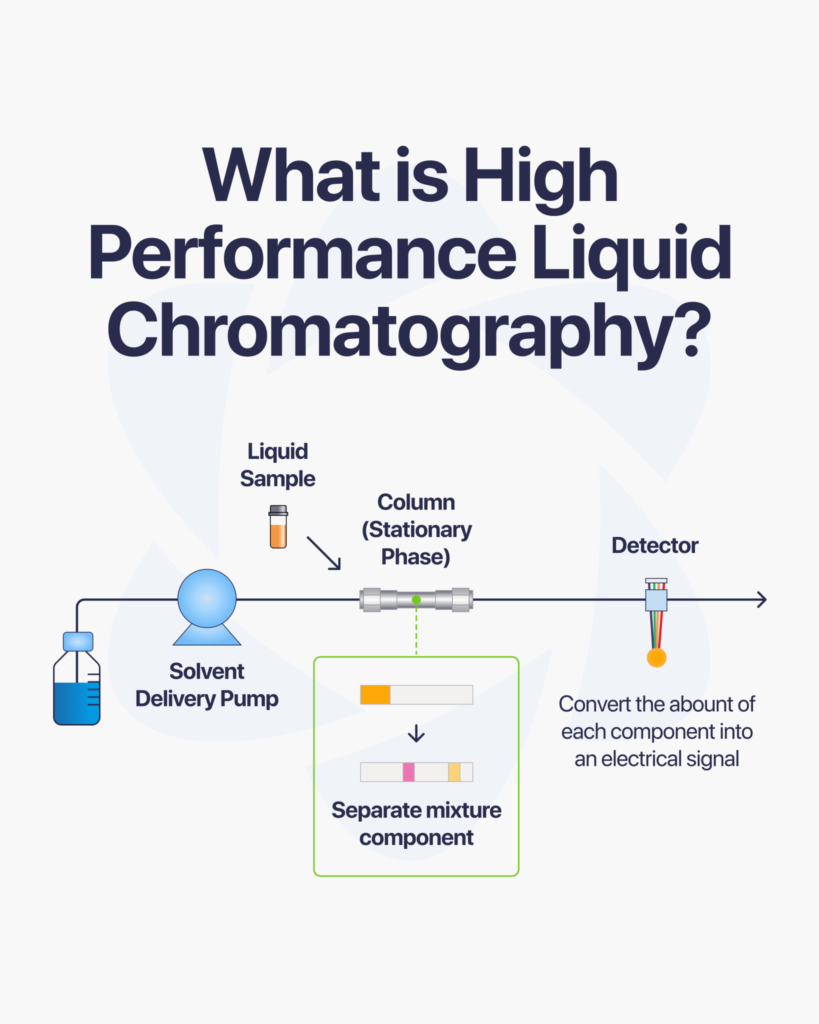
High-Performance Liquid Chromatography (HPLC) is an analytical laboratory technique used to separate, identify, and measure components within complex mixtures.
The process works by passing a liquid sample through a specialized column containing a stationary phase while a high-pressure pump moves a solvent, known as the mobile phase, through the system.
Different molecules interact with the stationary phase at different rates. These variations affect how quickly compounds pass through the column, producing unique retention times that researchers use for identification and analysis.
How HPLC Is Used in Research
HPLC is widely used across chemistry, biotechnology, and pharmaceutical research. In peptide and molecular research, it is commonly applied for:
Compound Purity Analysis
Researchers use HPLC to evaluate the purity of synthesized peptides and identify unwanted components or byproducts.
Peptide Separation
The technique allows scientists to separate peptide sequences, fragments, and related analogs based on their chemical properties.
Impurity Detection
HPLC can identify and measure very small amounts of impurities within research samples, supporting accurate characterization.
Sample Characterization
Researchers use HPLC-generated data alongside other analytical methods to prepare samples for additional structural and biological investigations.
Key Features of HPLC
High Separation Resolution
HPLC provides precise separation of compounds with similar chemical characteristics, making it valuable for detailed molecular analysis.
Quantitative Measurement
The technique allows researchers to estimate the concentration of specific compounds within complex mixtures with high analytical accuracy.
Broad Research Applications
HPLC can be used to analyze many types of molecules, including:
- Peptides.
- Proteins.
- Metabolites.
- Small organic compounds.
Flexible Scaling
HPLC methods can be adapted for different research needs, ranging from small analytical measurements to larger-scale purification processes.
Research Observations and Applications
Scientific research has consistently demonstrated the importance of HPLC in peptide characterization and quality analysis.
In peptide studies, reverse-phase HPLC is frequently used to evaluate sample composition and assess purity levels. Researchers also use HPLC methods to identify trace impurities, monitor chemical reactions, and evaluate changes during synthesis or storage.
Beyond peptide research, HPLC is commonly applied in areas such as:
- Metabolic research.
- Chemical synthesis monitoring.
- Compound stability studies.
- Pharmaceutical analysis.
Research Applications
Scientists use HPLC to investigate:
- Peptide identity and purity.
- Chemical composition of research samples.
- Molecular separation techniques.
- Analytical quality control methods.
- Changes in compounds during experimental processes.
Research Use Disclaimer
All products available through Aeturna Wellness are supplied exclusively for laboratory and scientific research purposes. They are not intended for human or animal consumption and are not approved to diagnose, treat, cure, or prevent any disease. The information provided on this page is intended solely for educational and informational purposes and should not be interpreted as medical advice or therapeutic guidance.