Peptide Research
Updated for Aeturna Wellness
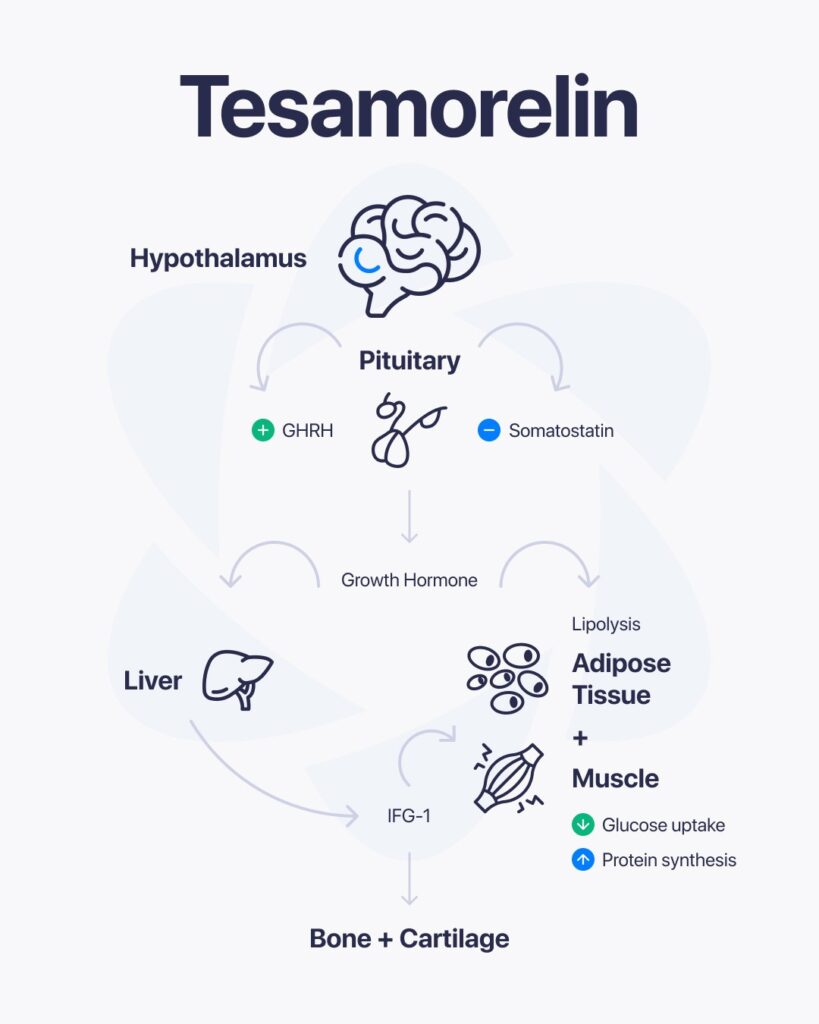
Tesamorelin is a synthetic analogue of growth hormone-releasing hormone (GHRH) developed to closely resemble the body’s naturally occurring hormone. In laboratory research, it is commonly used to investigate growth hormone regulation, metabolic function, and other biological pathways associated with endocrine activity. Its enhanced stability compared to native GHRH allows researchers to evaluate its effects over longer study periods.
Understanding Growth Hormone-Releasing Hormone (GHRH)
Growth hormone-releasing hormone (GHRH) is a naturally occurring peptide produced by the hypothalamus. It serves as an important signaling molecule involved in regulating growth hormone release from the pituitary gland.
In research settings, GHRH is associated with several biological functions, including:
- Supporting the release of growth hormone (GH) from the pituitary gland.
- Participating in protein and lipid metabolic pathways.
- Contributing to cellular communication involved in growth and tissue maintenance.
- Influencing the natural rhythmic patterns of growth hormone secretion.
Because naturally occurring GHRH is rapidly metabolized, researchers often utilize longer-lasting analogues such as Tesamorelin for extended experimental evaluation.
Current Areas of Tesamorelin Research
Growth Hormone Regulation
Tesamorelin interacts with GHRH receptors located in the pituitary gland, promoting the body’s natural release of growth hormone in laboratory models. This mechanism enables researchers to study how elevated GH levels may influence metabolism, body composition, and other physiological processes.
Research on Visceral Fat
One of the most widely investigated areas of Tesamorelin research involves its relationship with visceral adipose tissue. Experimental studies have reported reductions in abdominal visceral fat while demonstrating comparatively limited effects on subcutaneous fat, making Tesamorelin an important subject in metabolic research.
Metabolic and Glucose Research
Tesamorelin has also been examined for its potential influence on glucose regulation. Research findings suggest that, compared with certain other growth hormone-related peptides, Tesamorelin may have minimal impact on insulin sensitivity in specific experimental models. This characteristic continues to make it a valuable compound for ongoing metabolic investigations.
Research Use Notice
All products offered by Aeturna Wellness are supplied exclusively for laboratory and scientific research purposes. They are not intended for human or animal consumption, nor are they designed to diagnose, treat, cure, or prevent any disease. The educational information provided is intended solely to support scientific understanding and should not be interpreted as medical advice or therapeutic guidance.